
Instruments in Sussex County Deed Records
A deed does one thing. It moves an interest in land from one party to another. What that interest actually is depends on the instrument type and its language. The Sussex County Clerk's land records hold conveyances, deeds of trust, releases, easements, and plats. All are filed together in the same books. Match the legal description against the parcel and the earlier deed before drawing conclusions. Be careful with the consideration figure, too. A price printed in a deed may reflect a gift, a family transfer, a nominal sum, or a trustee's action. It is rarely a reliable market value.
| Deed Type | What It Does | Common Use |
|---|---|---|
| Bargain and sale / general warranty | Conveys land and links grantor to grantee | Review description, covenants and prior reference |
| Special warranty | Conveys with a narrower warranty scope | Read the terms in the instrument |
| Quitclaim | Transfers whatever interest the grantor holds | Often needs context from related deeds |
| Gift deed | Records a non-sale transfer | Do not equate stated consideration with market value |
| Trustee, executor or foreclosure deed | Records a fiduciary or sale transfer | Pair with court or estate authority when relevant |
Each instrument in the deed books does a distinct job. A deed transfers ownership. A deed of trust secures a debt. A release or certificate of satisfaction clears that lien once the obligation is paid. Easements and rights-of-way grant use rights without a transfer. A lis pendens flags pending litigation that could affect title. Several of these can attach to one parcel at once.
Sussex County's 1754 Land-Book Start
According to the Clerk, Sussex County land records run from 1754 through the most recently completed deed book. All of it is digitized. That is a remarkably long local chain. It still does not promise that every image or index entry is complete, since a failed search can stem from the name used, an image restriction, or a book that must be inspected in person. The Virginia SRA/COVERS access explanation is worth reading first, because it separates index searching from viewing document images. The county's own remote site requires a login. Image access comes only with Clerk authorization. For chains reaching before 1754, Surry County materials and archival finding aids pick up the thread. The Virginia Courts SRA/COVERS guide confirms that index access is free while the local Clerk controls images.
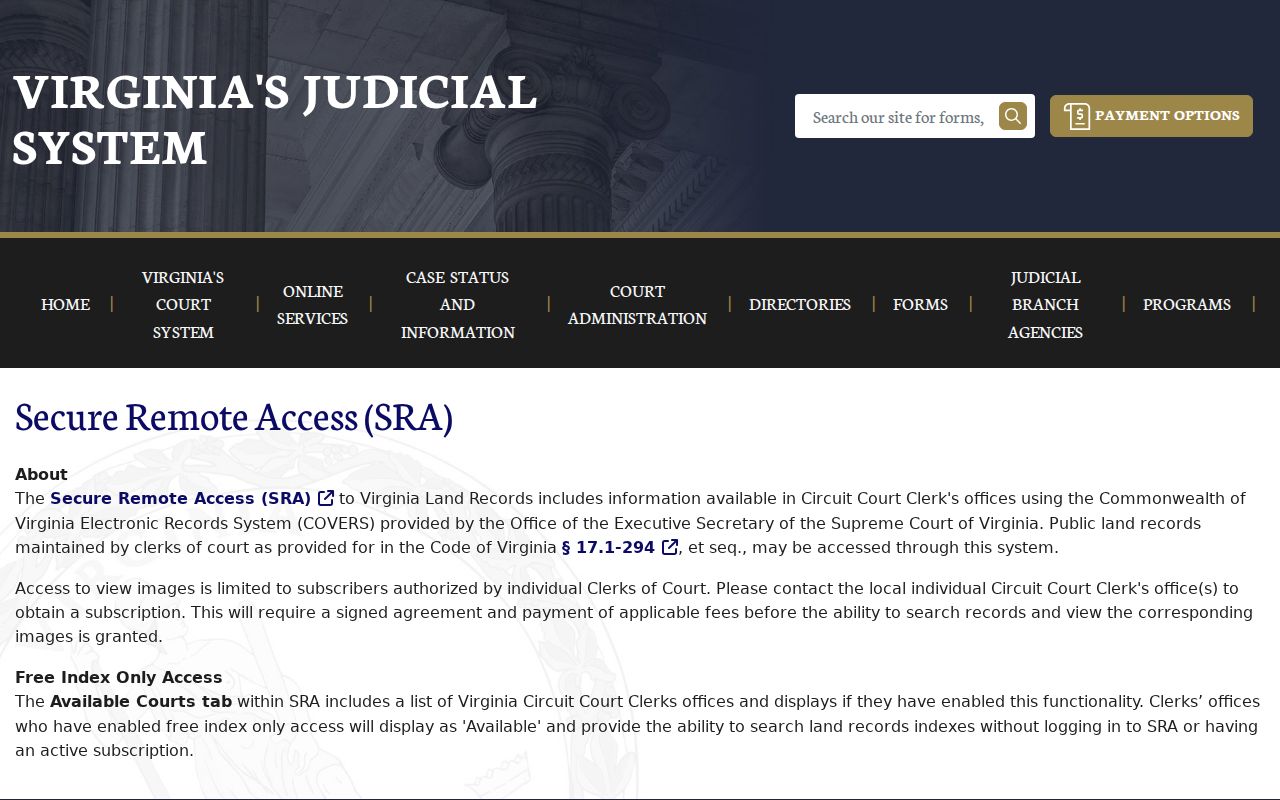
Treat the online range as a starting point. When a document will support a legal or closing decision, request the source book or a certified copy.
What the Sussex Clerk Index Exposes
The county's remote index sits behind a login, so its public details are limited. Grantor and grantee are the standard party keys for any land index. The exact control labels, date formats, and document-type filters on the credentialed screen are known only to authorized users. The Virginia SRA source explains the system itself rather than the county's specific fields.
| Local remote access | Username and password are required |
|---|---|
| Party fields | Grantor and grantee labels are not visible before login |
| Other keys | Date range, book/page, document type and instrument number need live confirmation |
| Offline search request | Give party names, approximate year, deed type and parcel description |
The Sussex remote-login page delivers images as PDFs marked unofficial. The Clerk at 15088 Courthouse Road holds the official records; call 434-246-1010 before making a copy request.
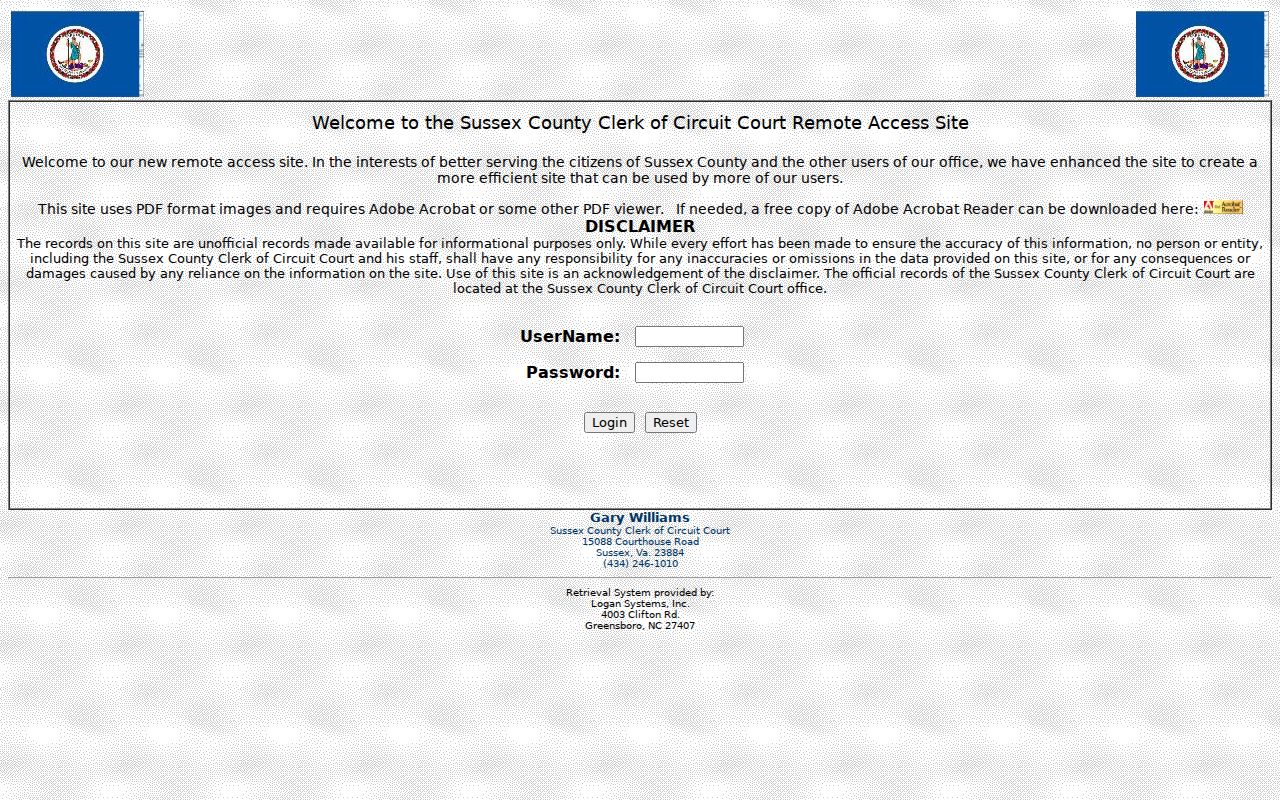
Include a legal description and parcel identifier, not just names, with any paper or certified request. That simple step avoids ordering the wrong same-name instrument.
Follow Sussex County Grantors and Grantees
The grantor conveys the interest. The grantee receives it. Working backward from a known owner of record, the index points you toward the prior deed, though a name alone can pull in unrelated people or entities. Anchor the chain with the property description, acreage, lot and block, instrument date, and cross-reference written into each deed.
- Find the latest deed and identify the grantee, grantor, recording date and parcel description.
- Copy any prior-instrument reference and use it before starting a broad surname search.
- Search the prior grantor as a grantee in an earlier conveyance, then compare the land description.
- Repeat until the chain reaches the needed period; use the Clerk's books or archives if an image is unavailable.
- Grantor
- The party named as transferring the interest.
- Grantee
- The party named as receiving the interest.
- Chain of title
- The sequence of conveyances tied to the same land.
- Prior instrument
- A reference to an earlier recorded document in the chain.
Plats and the Sussex County July 2012 Limit
The Clerk's online plat run ends in July 2012. A deed can still appear online while referencing a later plat absent from the same image collection. Note the plat book and page, surveyor, date, subdivision, lot and block, road dedications, easements, and any revision or vacation notation. Ask the Clerk how later plat images can be viewed. Planning and Zoning may hold approval material that explains the subdivision process. Absence from the GIS map is not proof a lot was never platted. Absence from the remote images is not proof either. The recorded survey and deed description govern the conveyance. GIS lines serve tax and map purposes, never as a survey.
Earlier Sussex Chains and Surry Sources
Sussex County was formed from Surry in 1754. Chains reaching that year simply continue in Surry records. The history is not lost. The Library of Virginia gateway is the place to identify county court, land, probate, map, and manuscript finding aids. Archival catalogs can point to a reel or collection. But they never replace the Clerk's current official record. For Sussex conveyances, the local deed books remain the direct source.
Sussex County reports no courthouse fire or countywide land-record loss. Never assume such an event explains a gap without further evidence.
Liens Alongside Sussex County Deeds
Deeds share the land records with many other instruments. The books also hold deeds of trust, certificates of satisfaction, releases, easements, judgments, and lis pendens. A deed of trust secures an obligation, and a later release or reconveyance may show it was cleared. The Clerk posts an online judgment-lien index from 2004. An index date proves nothing about older obligations.
A mechanic's lien requires the recorded memorandum plus any enforcement case. A lis pendens points to a court case. Pull the case and the final order. A Treasurer balance shows current tax-account status, but tax payment data cannot resolve a deed-of-trust or title question.
Search for the original instrument and every later release, satisfaction, or corrective filing. An index entry is only a clue. A judgment reference is too. Neither establishes the balance due, priority, or present enforceability, so the court file and later land records may be needed to settle the lien's status.
Request a Sussex County Deed Copy
Online images run through the Clerk's subscription route. An office request needs details. Include the parcel map pin or GPIN. Add the current and prior parties, the road or town, the deed type, the approximate year, the book/page or instrument number, the legal description, and the subdivision lot and block. Say whether you want a plain or certified copy. The Clerk publishes no current copy-fee schedule, so ask for an estimate rather than applying the county's general FOIA cost rule.
Visit 15088 Courthouse Road, Sussex, VA 23884. The county page lists 434-246-1010 and the mailing address, P.O. Box 1337. Name the record set. Ask about the counter, mail, or remote-image route. Keep the citation for follow-up, and check the received copy against the parcel description.
For a recorded lien or release, include the instrument type plus the debtor or property owner as well as the parcel. The judgment-lien index runs online from 2004. Older searches may need a different volume or a counter request, so record the book/page or instrument number for each lien and any later satisfaction. A search result proves little by itself. It does not show that an obligation remains unpaid.
Without a citation, gather the basics. Provide both parties as they may appear in the index, an approximate recording period, the town or road, and the acreage or lot description. A grantor search follows the person or entity conveying the land, while a grantee search follows the recipient. Surnames repeat in a rural county. Unrelated owners can share a name, so a surname alone is weak evidence.
Estate conveyances call for two requests. Request the land instrument and the probate file as separate records. The land-record subscription does not hold Sussex wills or estate files. The Clerk can direct a request for those court records, and the recorded executor, administrator, commissioner, or heirs deed remains the instrument to compare against the parcel's legal description.
Recorded, not guaranteed. The Sussex County deed index shows instruments of record, not every possible claim or unrecorded interest. A title professional reviews the chain and related liens before giving a title opinion.