
Sources for Former Sussex County Owners
Each source answers a different question. The Clerk's deed books form the core chain for former Sussex County owners. Wills and estate files can explain fiduciary authority. Their images are not online with the land records. Plats tie lot and block references back to the same ground. When a local chain crosses into Surry or another older source, the Library of Virginia can help. It can identify historical collection references.
| Source | Years It Covers | Where Held | What It Shows |
|---|---|---|---|
| Sussex deed books | 1754 through most recently completed book, per Clerk | Circuit Court Clerk; remote images by subscription | Grantor, grantee and conveyance references |
| Recorded plats | Online images stated through July 2012 | Clerk; Planning/GIS may hold related material | Lots, blocks, easements, roads and revisions |
| Judgment-lien index | Index reported from 2004 | Circuit Court Clerk | Separate encumbrance trail; verify document route |
| Wills and estate files | Not online with land images | Clerk office; archival finding aids may help | Authority and heirs around a transfer |
Work from the latest deed backward using its prior instrument reference. Remember that the 1754 date marks where digitization begins. It is not a promise that every page or index item is present. Ask the Clerk about the physical book or archival reference for older plans. The county reports no courthouse fire or countywide record loss. Know your access level before requesting images. The Virginia Courts SRA/COVERS guide explains the difference between a free index search and an authorized document image. The index search is free. The document image requires authorization.
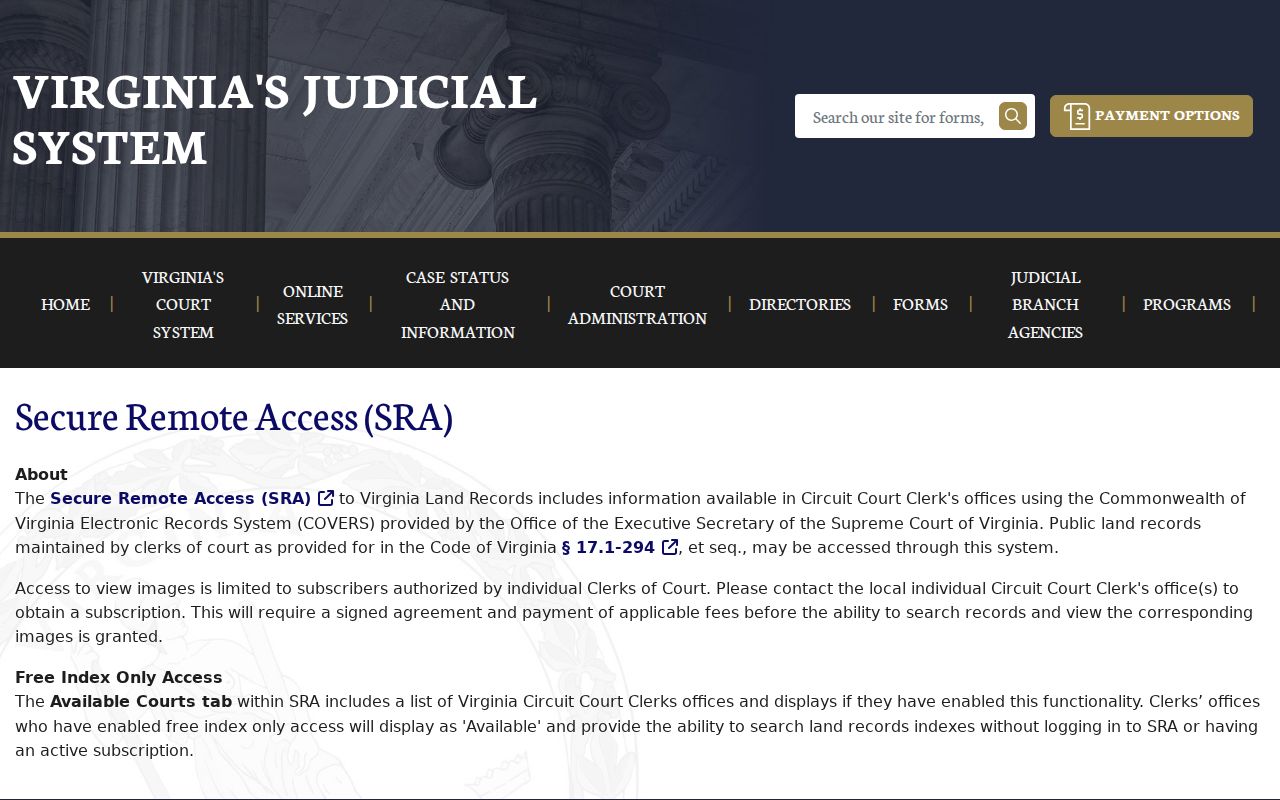
Find the instrument in the free index first. Then follow the Clerk's instructions for a full unofficial image or an official copy of the record.
Remote Images for Sussex County Prior Owners
The Clerk's remote land-record site requires a username and password. Images arrive as PDFs and carry an unofficial mark. Frequent users can request internet access from the Clerk. Published pricing runs $300 a year or $150 for six months. The official record remains at the Circuit Court Clerk. Virginia's SRA/COVERS framework distinguishes a free index from an authorized document image. The Sussex Clerk login page posts the remote access notice.
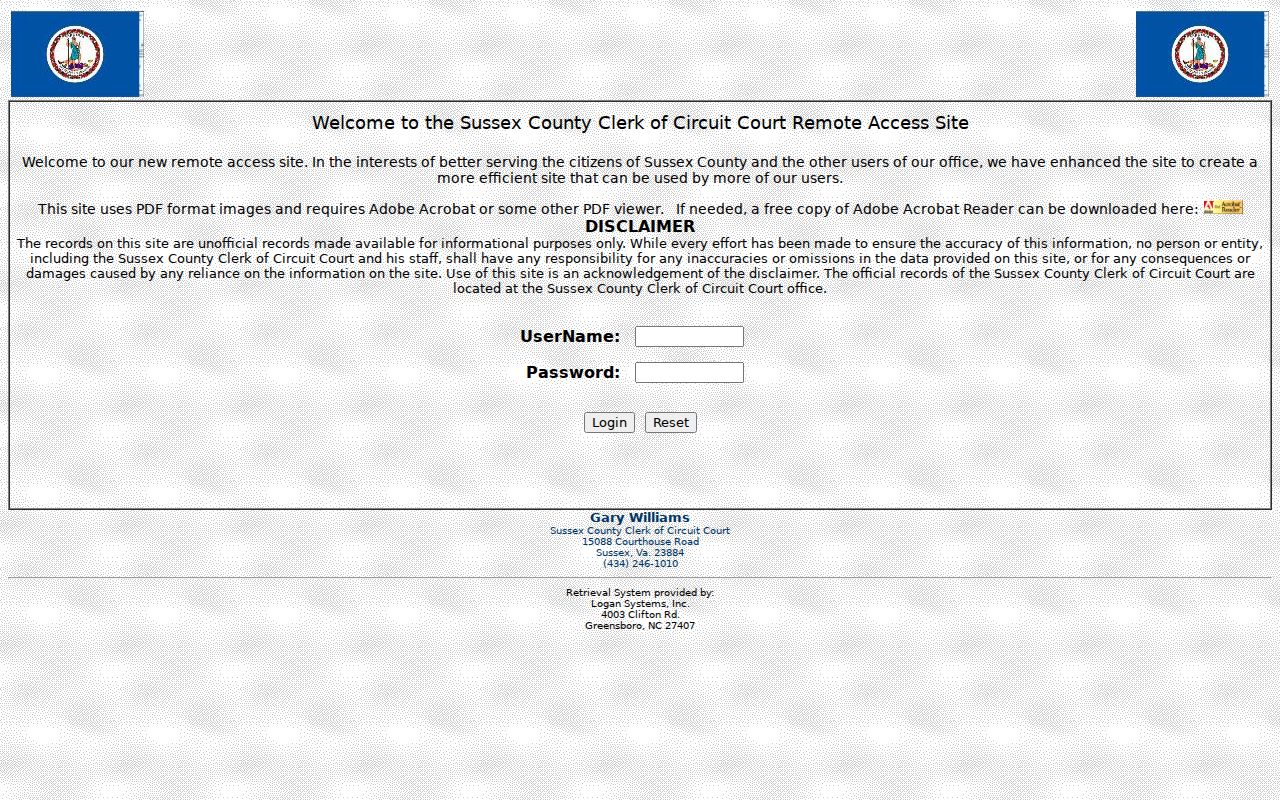
Save the index citation. Ask the Clerk for a certified copy whenever a former-owner link must be documented for official use.
Sussex County Plats Stop at July 2012 Online
Plats have their own cutoff. The Clerk puts online plats at July 2012, while land books continue through the most recently completed deed book. That gap matters. A later conveyance can cite a plat that needs an office or archive request, so copy the plat book and page, surveyor, date, subdivision name, lot and block, roads, easements, and revision notation before asking for the image.
Old road names add another wrinkle. Addresses from decades ago rarely match current signs, so confirm a plat belongs to your tract through the deed's legal description, acreage, and prior-instrument reference. Planning and Zoning can supply subdivision approval context. Still, the recorded plat governs the conveyance.
Reconstruct an Earlier Sussex County Deed Chain
A grantor conveyed; a grantee received. That distinction drives the whole search. Begin with the newest deed and follow its grantor backward as a grantee on an earlier instrument. Keep the legal description and acreage exact. A surname search alone can merge records for different families or parcels, so let the land, not the name, lead the way.
- Find the latest deed for the parcel and note its grantee, grantor, recording date and legal description.
- Copy the prior-instrument reference, acreage, plat citation, easements and reservations.
- Use the prior grantor as the grantee in an earlier deed search, then match the same land.
- Repeat until the desired period; ask the Clerk for the physical book or archive reference if the image is missing.
- Grantor
- The party transferring the interest in a deed.
- Grantee
- The party receiving that interest.
- Chain of title
- The sequence of recorded conveyances for the same land.
- Legal description
- The land description used to match old deeds when a street address changed.
Estate Records Behind Former Sussex Owners
A deceased owner's parcel moves through an executor's deed, administrator's deed, commissioner's deed, distribution deed, or conveyance from heirs. The paper trail changes shape. Wills and estate files are not part of the land-record subscription page, so request the probate file from the Circuit Court Clerk. Then search the recorded land index. Find the deed that actually moved the parcel. Look for several heirs signing as grantors, fiduciary language, life-estate reservations, and a legal description copied from an earlier deed. A will alone proves nothing about a specific parcel. When a search hits a name variant or an estate, match the person's role and legal description rather than assuming a shared surname means the same chain.
Before Sussex County: Search Surry Records
Sussex County was carved from Surry in 1754. A deed chain that old keeps going. The Library of Virginia catalog lists court, land, probate, map, and manuscript finding aids, along with microfilm references for predecessor records. Treat it as an archival gateway rather than a records office. Current official Sussex deed records stay with the Clerk. The Library of Virginia archive gateway is the natural starting point for historic references.
Gaps happen. Check any gap by volume and jurisdiction before calling it a loss, since the county reports no courthouse fire or countywide destruction of land records.
How Far Sussex County Owner History Reaches
Sussex County was created from Surry County in 1754. The Clerk's online land-record statement starts there and runs to the most recently completed deed book. Age alone proves little, though. A chain reaching 1754 often needs to continue in Surry County records rather than stopping there. Reaching that year does not make a deed an original colonial patent or identify the first owner of the land. Keep a transfer log as you work. Each entry should hold the date, grantor, grantee, deed type, book and page, and the description tying the record to the land.
Online coverage has edges you should learn early. Deed books start at the Clerk's stated 1754 beginning. Plat images run online only through July 2012, and judgment-lien indexing is reported from 2004. Wills and estate files sit outside the remote collection. So a missing result is not always a break. Test the gap against the series and its date range before treating it as a break in ownership.
Deeds often cite a prior instrument. Use that citation as your next search target. Still compare the parties, acreage, metes-and-bounds calls, lot and block, roads, easements, and reservations each time. Descriptions can change over the years. When one does, record the change and confirm the earlier and later tracts are the same land. Never bridge a gap on look-alike names alone.
A predecessor-jurisdiction search has a clear order. Start with the exact Sussex instrument that touches the 1754 boundary, then move to the matching Surry book or archival reference. A catalog entry can describe a volume without digitizing every page inside. Ask the Library of Virginia about the collection citation and the Clerk about the local continuation. That keeps an archival lead from passing as a complete chain.
Virginia SRA/COVERS may provide a free index where enabled, but an index hit is not a full image. The Sussex remote site needs credentials and shows unofficial PDFs. Paper or certified copies come from the Clerk. For a missing item, give the party names, date range, book or instrument reference, and property description, then ask which access route covers it.
Lawful use. Former-owner research supports house history, title work and property diligence. Do not use an old name or address to track, threaten or harass a living person.